Top 5 Tips for Wearing a Floral Tie Without Looking Overdressed
Floral ties can add personality to a suit without turning your outfit into a garden party. Use these five practical tips to get the balance right for weddings, work events, and evenings out.
.tys-ce-article h2{font-family:Georgia,Times New Roman,serif;font-size:clamp(27px,3vw,38px);line-height:1.2;margin:44px 0 16px;color:#111}.tys-ce-article h3{font-size:22px;line-height:1.3;margin:28px 0 10px;color:#181818}.tys-ce-article p{margin:0 0 19px}.tys-ce-article ul,.tys-ce-article ol{margin:0 0 24px;padding-left:26px}.tys-ce-article li{margin:8px 0}.tys-ce-article blockquote{margin:30px 0;padding:20px 24px;border-left:4px solid #c7a45a;background:#f7f4ec;border-radius:0 14px 14px 0;font-family:Georgia,Times New Roman,serif;font-size:20px}.tys-ce-article a{color:#7a5b1d;text-decoration-thickness:1px;text-underline-offset:3px}
A floral tie has a useful talent: it can make a familiar navy suit feel considered rather than routine. It can also become the loudest thing in the room if the rest of the outfit starts competing for attention. The difference is usually not bravery. It is balance.
Here are five practical ways to wear a floral tie with confidence, whether you are heading to a wedding, a spring event, or a dinner where “smart casual” is doing a suspicious amount of work.
1. Let the tie be the most interesting thing you are wearing
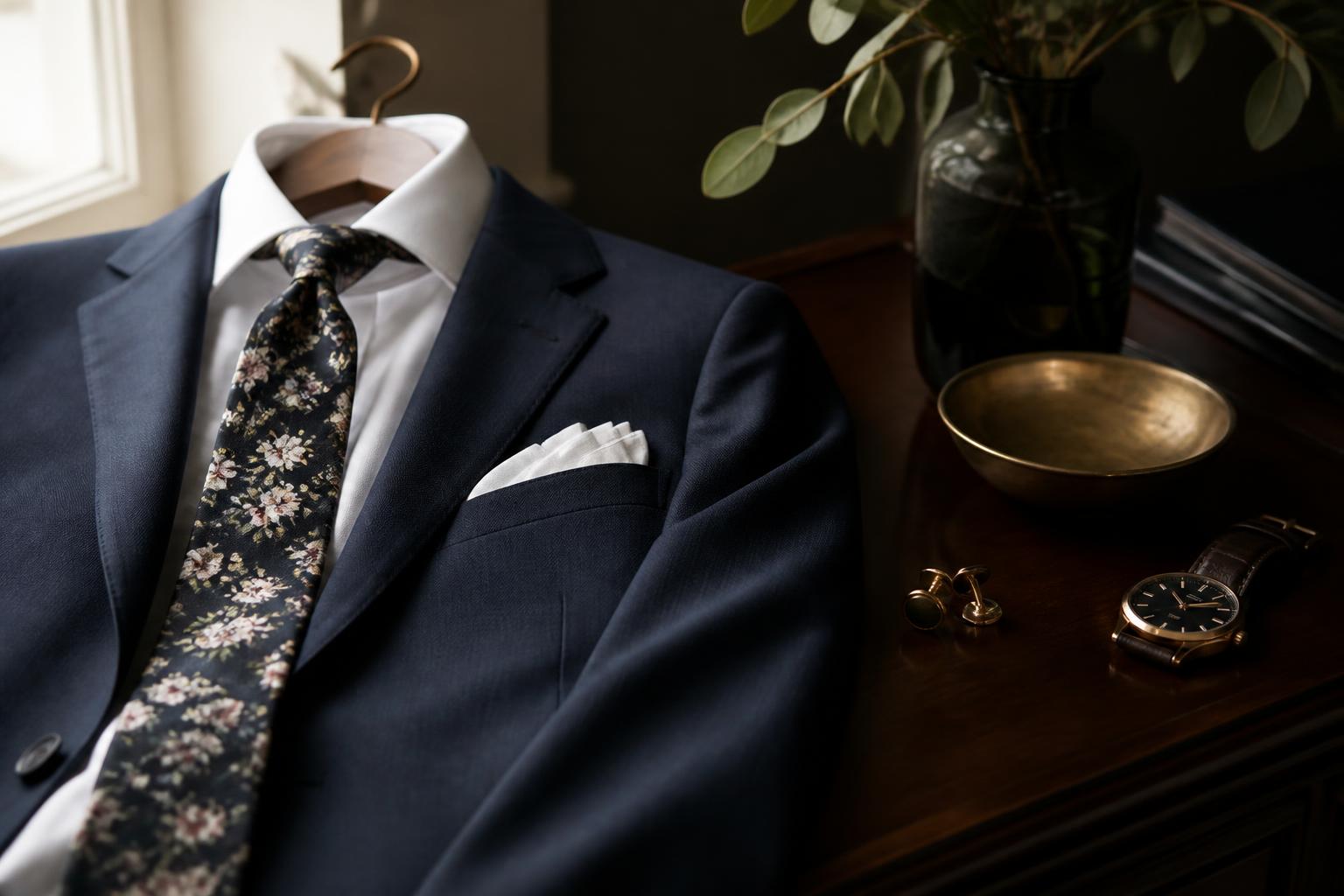
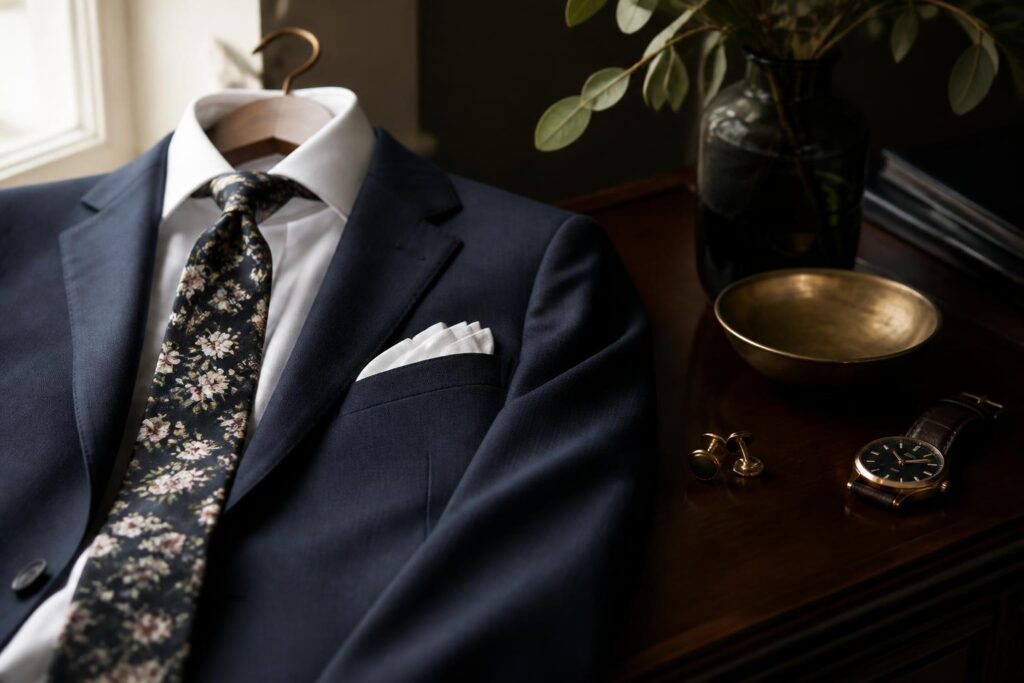
The easiest way to make a floral tie look polished is to give it room to work. Pair it with simple, solid-color clothing so the pattern adds character without creating visual clutter.
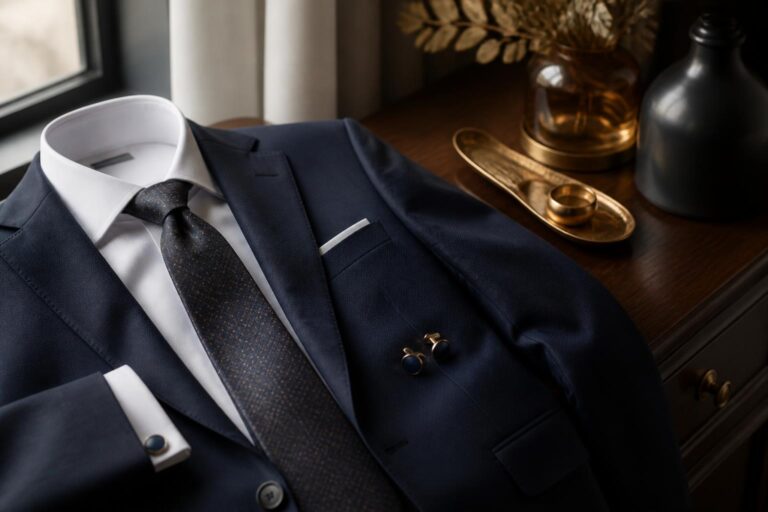
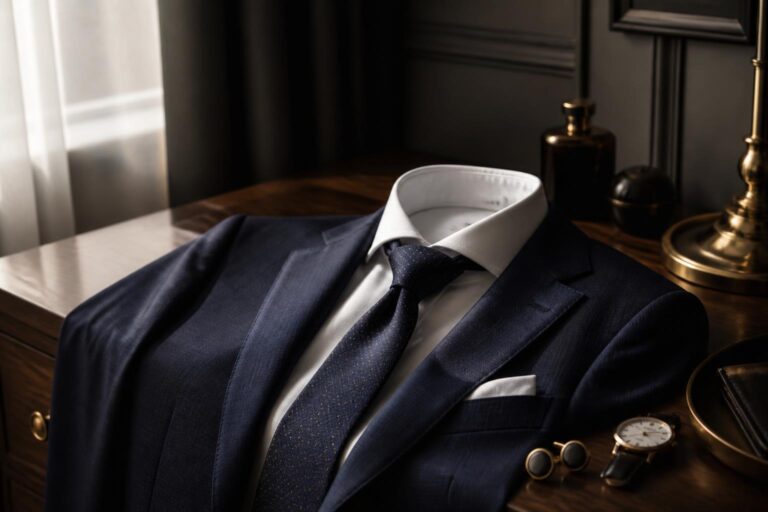
Navy, charcoal, light gray, cream, and medium blue are dependable partners. A white or pale blue shirt is especially useful because it gives the tie a clean background. If you choose a patterned shirt, keep the pattern small and restrained, then make sure the tie’s colors relate to at least one shade in it.
Avoid stacking several attention-grabbing details at once. Floral tie, checked shirt, bold pocket square, patterned socks, and colorful lapel pin may sound expressive in theory. In practice, it can look like your accessories held a meeting without inviting your jacket.
Think of the outfit as a supporting cast. The tie gets the speaking part; everyone else should know their lines.
2. Match the scale of the flowers to the occasion
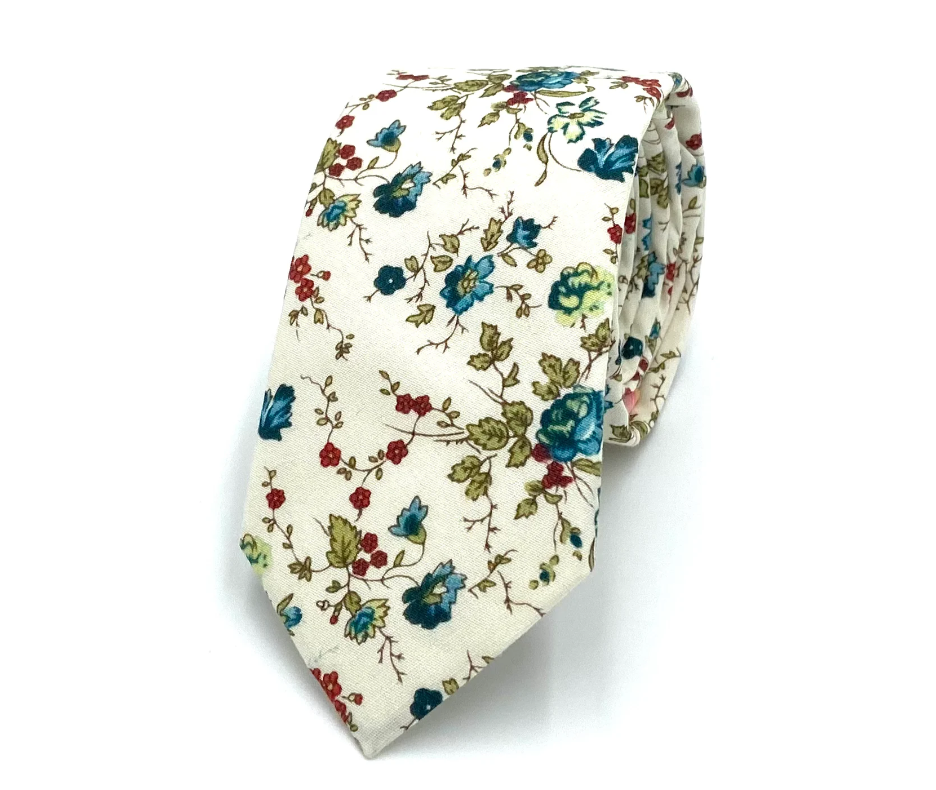
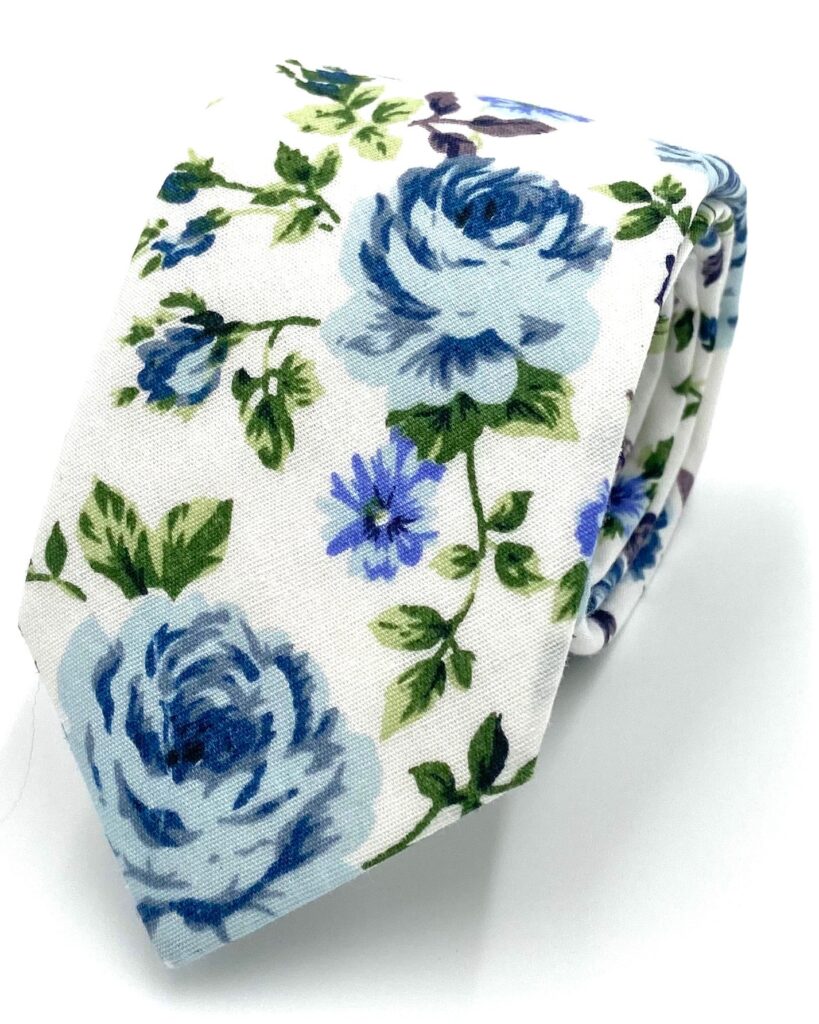
Not every floral tie makes the same impression. Smaller, closely spaced motifs tend to look quieter and more office-friendly. Larger blooms or high-contrast designs feel more festive and are often better suited to weddings, celebrations, and evening events.
This is not a strict rule, but it is a useful volume control. If the invitation calls for traditional or formal attire, choose a floral design with a controlled pattern and colors that are easy to pair. For a relaxed outdoor wedding or celebratory dinner, you can turn up the scale and color a little.
The Lantana is a good example of a floral tie with a contemporary point of view. Its pattern can bring personality to a simple suit while keeping the rest of the outfit straightforward. Wear it with a solid shirt and let the fabric and motif do the work.
3. Build the outfit around color, not exact matching
Your tie does not need to match your shirt, pocket square, and socks perfectly. In fact, exact matching can make an outfit look overly planned. Instead, look for a shared color relationship.
Start by identifying the background color of the tie. A darker background often pairs naturally with a lighter shirt and a medium or dark suit. Then notice one or two accent colors in the flowers. Echo one of those shades in a pocket square, socks, or even the subtle tone of your shirt. Stop there.
For example, if the tie includes muted blue and green, a blue shirt or simple white pocket square may be enough. There is no need to locate a green belt and launch a full botanical investigation.
When in doubt, use the pocket square as a quiet bridge rather than a duplicate. A white linen square with a simple fold works with nearly any floral tie and keeps the outfit from feeling like a matching set.
4. Choose the knot and tie length deliberately
A floral tie can look less polished if the knot is too small, too loose, or paired with the wrong collar. You do not need a complicated knot; you need a knot that suits the shirt and your proportions.
For most dress shirts, a neat four-in-hand is a reliable choice. It creates a slightly asymmetrical shape that feels natural and does not compete with the pattern. A half-Windsor can provide a fuller, more balanced knot when you are wearing a spread collar or want a more formal appearance.
Whichever knot you choose, tighten it so it sits cleanly against the collar without strangling you. The narrow end should stay hidden behind the wide end, and the tip of the wide end should land around the middle of your waistband or belt. Too short looks accidental; too long looks like your tie is trying to leave before you do.
If you want a refresher on the mechanics, Ty’s guide to five tie knots every man should know covers the practical differences without requiring a degree in neckwear.
5. Adjust the fabric to the setting
Texture changes the message of a tie. A smooth, refined fabric generally reads as more formal, while cotton and other textured materials can make a floral pattern feel more relaxed and approachable.
That makes fabric an important part of choosing the right tie for the occasion. For a formal ceremony or evening reception, use a floral tie with a clean finish and a controlled color palette. For a daytime gathering, outdoor celebration, or less rigid dress code, texture can help the look feel comfortable rather than ceremonious.
The Brilliant Bliss brings a cheerful floral note in 100% cotton, making it a natural option when you want personality without excessive formality. Pair it with a crisp solid shirt, an unstructured or lightly tailored jacket, and trousers that keep the overall outfit grounded.
For more background on why the material matters, Ty’s guide to why cotton ties deserve a place in every wardrobe is a useful companion.
A quick floral-tie checklist
- Shirt: Start with a solid color, especially if the tie has a bold pattern.
- Suit: Navy, charcoal, gray, and neutral tones are dependable foundations.
- Pattern: Choose smaller motifs for quieter settings and larger motifs for festive ones.
- Accessories: Repeat one color at most; do not match every detail exactly.
- Knot: Keep it neat, comfortable, and suited to your collar.
- Length: Aim for the tie tip to meet the middle of your waistband or belt.
The bottom line
A floral tie works best when it adds one clear idea to an outfit: color, texture, or personality. Keep the shirt simple, coordinate by color family rather than exact matching, and choose the pattern’s scale and fabric with the occasion in mind. Do that, and you will look distinctive for the right reason—not because your tie staged a hostile takeover.