
The Seasonal Tie Rotation: A Simple Way to Dress for the Calendar
Build a four-season tie rotation that feels intentional, works with your existing shirts and jackets, and keeps your outfit from looking stuck in last month.
.tys-ce-article h2{font-family:Georgia,Times New Roman,serif;font-size:clamp(27px,3vw,38px);line-height:1.2;margin:44px 0 16px;color:#111}.tys-ce-article h3{font-size:22px;line-height:1.3;margin:28px 0 10px;color:#181818}.tys-ce-article p{margin:0 0 19px}.tys-ce-article ul,.tys-ce-article ol{margin:0 0 24px;padding-left:26px}.tys-ce-article li{margin:8px 0}.tys-ce-article blockquote{margin:30px 0;padding:20px 24px;border-left:4px solid #c7a45a;background:#f7f4ec;border-radius:0 14px 14px 0;font-family:Georgia,Times New Roman,serif;font-size:20px}.tys-ce-article a{color:#7a5b1d;text-decoration-thickness:1px;text-underline-offset:3px}
Your wardrobe does not need a complete seasonal makeover every few months. A smarter approach is to change the small details first, especially the tie. It is close to the face, easy to swap, and capable of making the same navy jacket feel right in January, June, or somewhere in between.
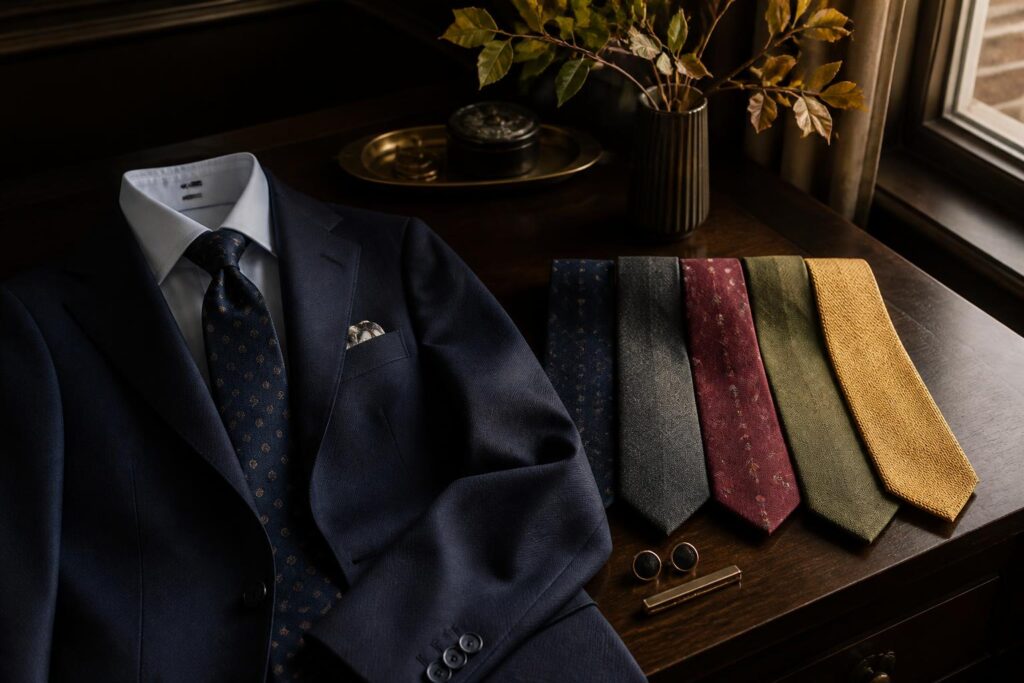
The trick is not to chase every seasonal trend. Instead, use the calendar as a prompt to adjust visual weight, pattern energy, and formality. Here is a practical rotation that keeps your outfits fresh without turning your closet into a textile museum.
1. Start with the season’s visual weight
Before choosing a color or pattern, decide how substantial the outfit should look. In colder months, heavier-looking combinations generally feel more natural: darker grounds, more contrast, and patterns that can hold their own against wool jackets, overcoats, and boots.
As the year warms up, outfits usually benefit from a lighter visual touch. That does not mean every tie must be pale or pastel. It can simply mean a cleaner pattern, a brighter accent, or a less serious overall impression.
- Winter: Favor depth, contrast, and patterns with a composed, structured feel.
- Spring: Introduce clearer color and livelier patterns while keeping the rest of the outfit calm.
- Summer: Let the tie feel breathable and relaxed, especially for daytime settings.
- Fall: Return to richer tones and grounded combinations, but avoid making every item dark at once.
This is less about rules than balance. A bright tie can work in winter, just as a dark tie can work in summer. The question is whether the whole outfit agrees with it.
2. Build around your dependable shirts
A seasonal rotation works best when it starts with shirts you already wear. White, light blue, and soft gray are useful year-round because they give seasonal ties room to speak without creating a color-matching emergency before breakfast.
For a winter look, pair a white shirt with a tie that has a strong pattern or deep contrast, then anchor it with a charcoal, navy, or brown jacket. If the tie has a lot happening, keep the pocket square quiet or skip it entirely. Your chest does not need its own committee meeting.
In spring, a light blue shirt can soften a patterned tie and make the outfit feel less formal without becoming casual. This is a good time to use medium-scale motifs or clearer color combinations. The jacket can stay navy or gray; the seasonal shift comes from the tie and the shirt’s overall brightness.
For summer, white or very pale blue shirts pair well with ties that have an easy, open feeling. A cotton option such as Honu, with its textured fabric and sea turtle motifs, can suit a relaxed warm-weather setting when the jacket and trousers are kept simple.
3. Match the tie to the occasion, not just the temperature
Seasonal style can go wrong when “summer” becomes an excuse to dress casually everywhere or “winter” becomes a reason to wear the most serious tie in the drawer. Temperature matters, but the setting still gets the final vote.
For the office
Choose a tie that looks intentional under indoor lighting and works with your regular suit rotation. In winter and fall, darker grounds and restrained patterns are reliable. In spring and summer, a lighter or more expressive tie can work, provided the shirt and jacket remain straightforward.
For formal events
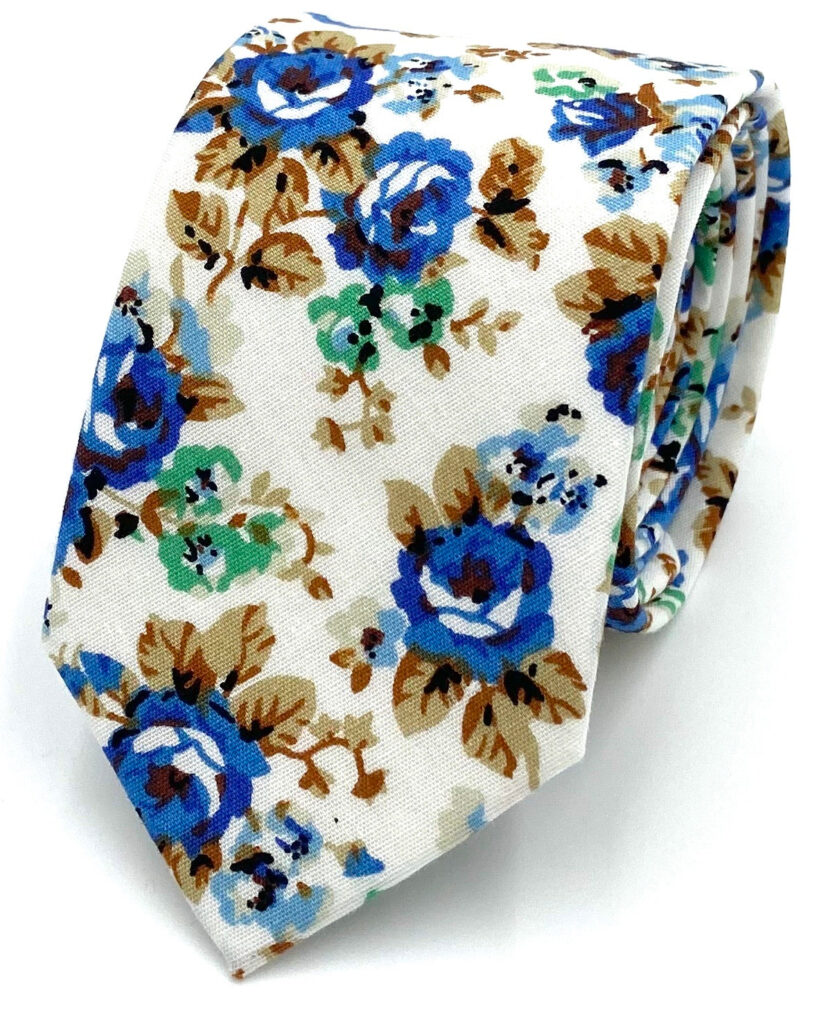
Keep the season visible but controlled. Winter formalwear can handle a little more contrast and depth. Spring and summer events allow more color, though the tie should still support the suit rather than compete with it. A pattern with a pale or wintry foundation, such as Snowy Bloom, can bring seasonal character to a formal outfit while keeping the jacket and shirt polished.
For outdoor gatherings
Think about movement, sunlight, and how relaxed the event will feel. A tie with a distinctive motif may be entirely appropriate for a garden party, destination celebration, or warm-weather dinner, but pair it with solid garments. Let one accessory provide the personality.
4. Use pattern scale to mark the change
Pattern scale is an easy seasonal lever because it changes the impression of an outfit without requiring a new color theory degree. Smaller, tighter patterns tend to look more restrained and businesslike. Larger or more noticeable motifs feel more relaxed and expressive.
- Cold-weather workdays: Use smaller patterns or clear geometric structure with dark or medium-value suits.
- Early spring: Move toward medium-scale patterns that add interest without taking over.
- Summer social events: Larger motifs can work, especially when the rest of the outfit is solid and uncomplicated.
- Fall weekends and dinners: Return to medium patterns with richer colors, then balance them with a plain shirt.
There is no requirement to retire a tie because the month changed. If the pattern works with the outfit and the occasion, it stays in rotation. Seasonal dressing is a nudge, not a custody arrangement.
5. Make the jacket do less work
The most useful seasonal tie is one that does not demand a completely new wardrobe around it. Before buying or choosing anything, look at your most-worn jackets and ask what they need.
A navy jacket is particularly flexible. It can support a deeper winter pattern, a bright spring accent, or a relaxed summer motif. Gray jackets are similarly adaptable, though they may benefit from a little color when the outfit begins to feel flat. Brown or tan jackets naturally lean toward fall, but a crisp shirt and a lighter tie can keep them from looking overly heavy.
Quick test: Put on the jacket, shirt, and tie together, then view the outfit from several feet away. If the tie is the first thing you see, simplify one other element. If nothing stands out, add contrast through the tie rather than piling on accessories.
A five-minute seasonal check
At the beginning of each season, pull out five ties and run through this list:
- Does each tie work with at least two shirts you actually wear?
- Can you name one suitable occasion for it?
- Does its visual weight suit the jackets in your current rotation?
- Is the pattern adding personality or merely adding noise?
- Would it still look good if the rest of the outfit stayed simple?
Keep the ties that pass most of the test near the front of the drawer. Store the rest without drama. A tie that is wrong for February may be exactly right in August, and your closet has room for delayed gratification.
The takeaway
Seasonal style is easiest when you change one controlled detail at a time. Adjust the tie’s visual weight, pattern scale, and level of formality to fit the season and the setting, while letting dependable shirts and jackets do the heavy lifting.
That approach keeps your wardrobe practical, gives familiar clothes a fresh rhythm, and helps you look dressed for the moment rather than dressed by the calendar app.