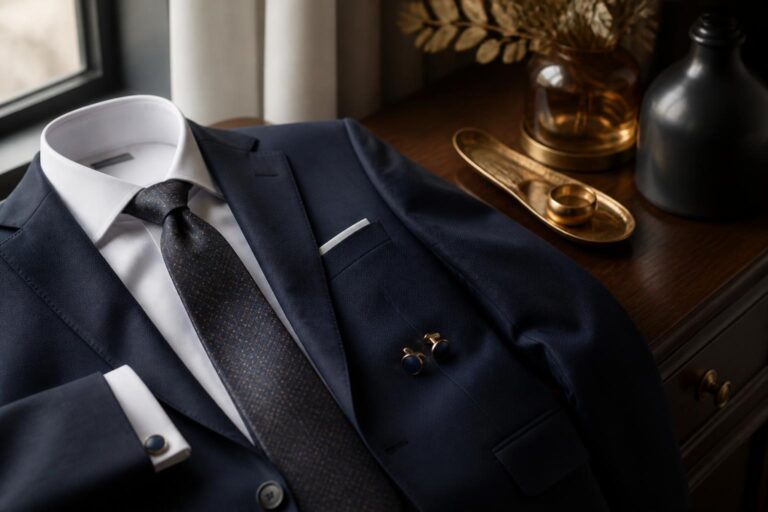

The Wedding-Day Outfit Plan: How to Stay Sharp From First Photo to Last Dance
A practical wedding-day dressing plan for handling long hours, changing temperatures, photos, dancing, and the occasional spilled drink without losing your composure—or your collar.

.tys-ce-article h2{font-family:Georgia,Times New Roman,serif;font-size:clamp(27px,3vw,38px);line-height:1.2;margin:44px 0 16px;color:#111}.tys-ce-article h3{font-size:22px;line-height:1.3;margin:28px 0 10px;color:#181818}.tys-ce-article p{margin:0 0 19px}.tys-ce-article ul,.tys-ce-article ol{margin:0 0 24px;padding-left:26px}.tys-ce-article li{margin:8px 0}.tys-ce-article blockquote{margin:30px 0;padding:20px 24px;border-left:4px solid #c7a45a;background:#f7f4ec;border-radius:0 14px 14px 0;font-family:Georgia,Times New Roman,serif;font-size:20px}.tys-ce-article a{color:#7a5b1d;text-decoration-thickness:1px;text-underline-offset:3px}
A wedding outfit has a tougher job than a regular formal look. It needs to survive an early start, a long ceremony, outdoor photographs, dinner, dancing, and at least one person enthusiastically hugging you while holding a drink. The secret is not adding more stuff. It is preparing the right details in the right order.
Think of this as a wedding-day field guide for staying comfortable, presentable, and ready for the next photograph.
1. Build the outfit around the longest part of the day
Many men dress for the ceremony and forget that the reception may last several more hours. A suit that feels fine at noon can become less charming by 9 p.m. Start with the full schedule, not just the invitation.
- Morning ceremony: Plan for cooler temperatures, early travel, and a crisp look that will not need much adjustment.
- Afternoon outdoor event: Prioritize breathable layers and shoes you can stand in for a while.
- Evening reception: Make sure your shirt, collar, and tie still look intentional after hours of wear.
- All-day celebration: Choose a jacket and trousers that move comfortably, then keep the finishing details simple and reliable.
This does not mean dressing down. It means avoiding an outfit that only works for the first 45 minutes. Formalwear should look composed without requiring constant maintenance.
2. Do a complete test run the day before
The night before, lay out everything you will wear, including the items that usually get treated as an afterthought. Put on the shirt, jacket, trousers, shoes, tie, belt, and socks together. Stand, sit, walk, and reach for something on a high shelf. The high shelf is an excellent, if slightly unglamorous, style consultant.
Look for practical problems:
- Does the shirt stay tucked? If it immediately escapes, it will not improve during a six-hour celebration.
- Does the tie reach the right point? The tip should sit around the middle of your waistband or belt area, rather than floating above it or hanging noticeably below.
- Do the shoes pinch? A wedding is a poor time to discover that “breaking them in” means limping through cocktail hour.
- Do pockets create bulk? Carry only what you need. A phone, wallet, keys, and perhaps a small handkerchief are usually enough.
- Does the jacket close comfortably? You should be able to button it for photos without looking like you are negotiating with it.
If something needs fixing, you have time. If you wait until the car ride, your options become optimism and safety pins.
3. Treat the tie as a timed piece of equipment
Your tie is often the first detail to look tired. Avoid tying it hours before you need to leave, especially if you will be moving around while getting ready. Hang it neatly or keep it laid flat until the shirt is on and the collar is settled.
Before putting it on, check the front and back for creases, loose threads, or a knot that has lost its shape. Tie it firmly enough to sit neatly at the neck, but not so tightly that you spend the ceremony thinking about your pulse.
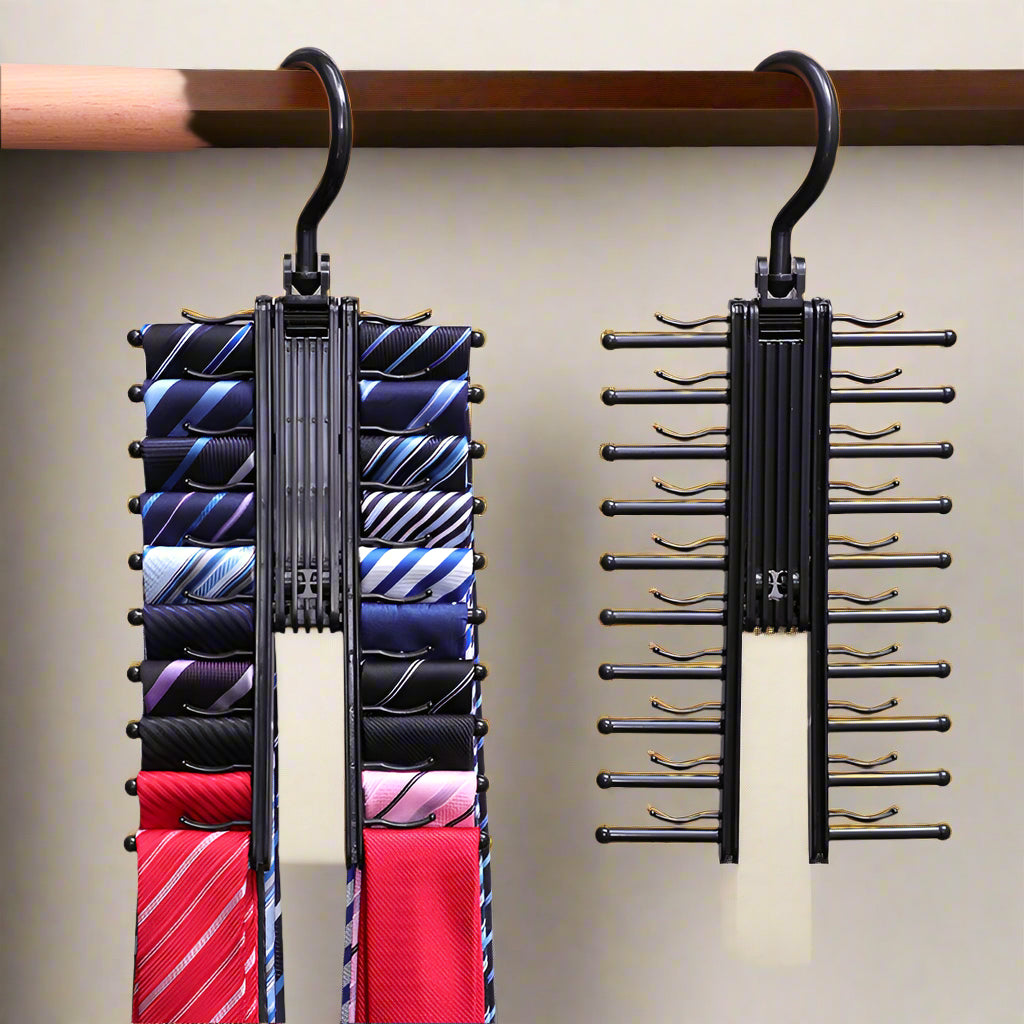
If you own several ties, the day-before setup is also a good time to make the choice visible instead of leaving it to a rushed morning debate. A Tie Smart – Swivel Hook 20x Tie Holder can help organize and protect a tie collection, making it easier to find the right option without digging through a tangled drawer.
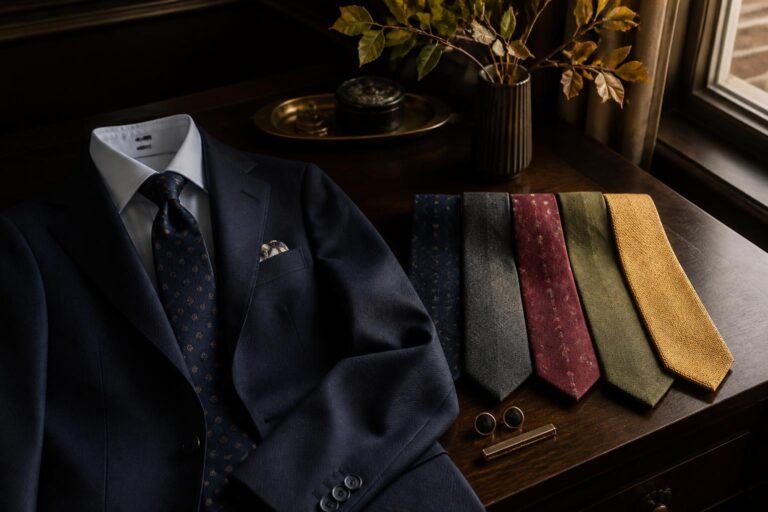
Once the tie is on, check it from a distance. Formal accessories should support the whole outfit, not demand a separate introduction. If the tie is bold, keep the rest of the look calm. If the suit and shirt already have plenty happening, let the tie be the quiet professional in the room.
4. Pack a small “save the outfit” kit
You do not need a suitcase of grooming products. A compact emergency kit is enough to handle the problems that commonly appear after the ceremony.
- Lint roller or small brush: Useful for dark jackets, especially after sitting in cars or banquet chairs.
- Handkerchief: Practical for perspiration, a spilled drink, or a surprisingly emotional toast.
- Stain-removal pen: Keep it for small marks, and test any product according to its instructions before rubbing fabric aggressively.
- Breath mints: More considerate than relying on the open bar to solve the problem.
- Bandages: A tiny blister can become the main character of your evening.
- Phone charger: Wedding days create a remarkable number of photographs and messages.
Give the kit to a trusted person if your formalwear has limited pocket space. The goal is to be prepared, not to look as if you are relocating to the reception.
5. Plan for the jacket-off moment
At some point, the jacket may come off. That is not a failure; it is a normal part of surviving a long event comfortably. The important thing is to make sure the shirt and tie can stand on their own.
Before the reception, check that the shirt collar is still sitting evenly and that the tie is centered. If the dress code expects a jacket throughout dinner or dancing, keep it on for the formal portions and follow the lead of the wedding party. If jackets are clearly coming off later, do the same neatly rather than draping yours over a chair and hoping for the best.
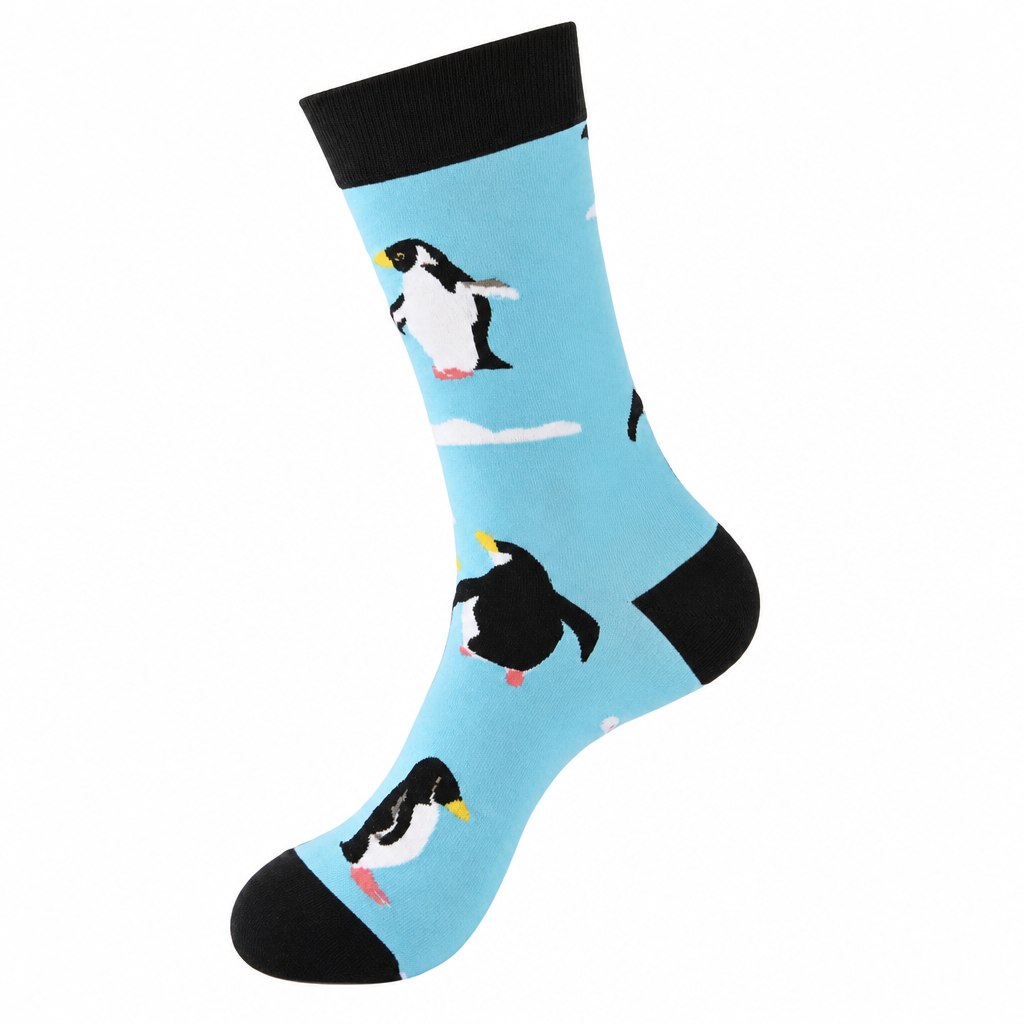
Socks deserve a little attention here too. They should stay comfortably in place and cover the ankle when you sit. If the celebration has a playful, relaxed moment after the formal photos, something like Happy Feet—described as 100% cotton with “Antarctic cuteness”—could be a fun choice only when it fits the couple’s tone and will remain mostly under wraps. For the ceremony and formal photographs, understated is usually the safer move.
6. Use the photo check, not the mirror check
Mirrors show you how the outfit feels up close. Photographs show how it actually reads. Before leaving, take one quick full-length photo in natural light. Check the tie length, jacket closure, shirt collar, trouser break, and whether anything is pulling or bunching.
Take another photo after the ceremony if possible. This catches the small changes that happen during the day: a collar that has shifted, a tie that has loosened, or a jacket pocket that has filled with receipts. Fixing those details takes less than a minute and pays off in every group photo afterward.
The useful rule: If you would notice the problem in a photograph, fix it before the next photograph.
Quick wedding-day checklist
- Try on the complete outfit the day before.
- Check the tie, shoes, shirt, and jacket while sitting and walking.
- Lay out accessories so the morning stays calm.
- Pack a compact emergency kit.
- Take a full-length photo before leaving.
- Recheck your collar, tie, and jacket after the ceremony.
- Follow the wedding party’s lead on jackets, bold accessories, and casual changes.
A sharp wedding look is less about making a dramatic entrance and more about staying polished as the day unfolds. Prepare early, keep the details controlled, and choose comfort that can survive the last dance. Your future self—and the photographer—will appreciate it.