Tie Etiquette After You Put It On: A Practical Guide to Wearing It Well
Tie etiquette is less about rigid rules and more about reading the room. Learn when to button up, loosen up, and retire your tie without turning a polished outfit into a costume.
.tys-ce-article h2{font-family:Georgia,Times New Roman,serif;font-size:clamp(27px,3vw,38px);line-height:1.2;margin:44px 0 16px;color:#111}.tys-ce-article h3{font-size:22px;line-height:1.3;margin:28px 0 10px;color:#181818}.tys-ce-article p{margin:0 0 19px}.tys-ce-article ul,.tys-ce-article ol{margin:0 0 24px;padding-left:26px}.tys-ce-article li{margin:8px 0}.tys-ce-article blockquote{margin:30px 0;padding:20px 24px;border-left:4px solid #c7a45a;background:#f7f4ec;border-radius:0 14px 14px 0;font-family:Georgia,Times New Roman,serif;font-size:20px}.tys-ce-article a{color:#7a5b1d;text-decoration-thickness:1px;text-underline-offset:3px}
A tie can make an outfit look intentional in about 30 seconds. It can also make you look oddly out of step if you wear it too formally, too casually, or halfway between the two. The good news: tie etiquette is not a maze of ancient rules. It is mostly about showing respect for the occasion, keeping your proportions tidy, and knowing when the tie has done its job.
Here is a practical guide to the moments that cause the most uncertainty, from walking into a ceremony to deciding what happens after dinner.
1. Arrive with the tie properly finished
The first rule is simple: if the occasion calls for a tie, wear it correctly when you arrive. That means the knot is snug against the collar, the top button is fastened, and the narrow end is not peeking out below the wide end.
Your tie should reach roughly the middle of your waistband or belt buckle. Too short looks accidental; too long looks like it is trying to escape. If your shirt collar has a noticeable gap around the knot, tighten the tie or choose a knot with a little more presence.
For most work settings, dinners, and ceremonies, a four-in-hand is a reliable choice. It is slightly asymmetrical, relatively narrow, and not overly formal. A half-Windsor gives a fuller, more balanced shape when you are wearing a spread collar or a suit with broader lapels. If you need a quick refresher, Ty’s guide to five tie knots every man should know covers the useful options without turning knot-tying into a graduate course.
2. Match the tie to the room, not just the calendar
“It is a formal event” is useful information, but it does not tell the whole story. The venue, time of day, season, and host’s style all matter. A tie for a daytime garden ceremony can have more texture or pattern than one for a conservative evening event. A business presentation usually benefits from restraint, while a celebratory dinner gives you more room to show personality.
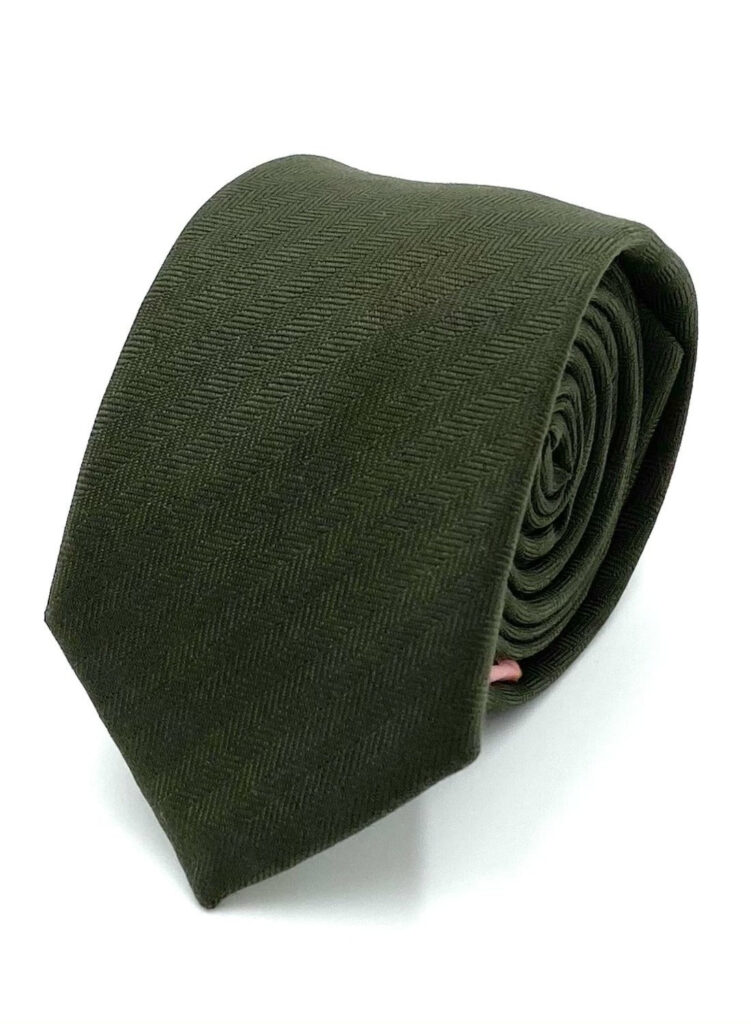
Think in terms of visual volume. If your suit is dark and plain, a little texture or a quiet pattern can add interest. If the shirt is striped or checked, keep the tie calmer so the outfit does not become a negotiation between competing lines. A cotton option such as the Olive Green tie brings an earthy, textured note that works well with navy, gray, and lighter seasonal tailoring.
Pattern does not automatically mean casual, and solid does not automatically mean formal. The scale and contrast of the design matter more than the label. A restrained patterned tie can be perfectly appropriate for a ceremony, while a shiny solid tie may feel too businesslike at a relaxed outdoor gathering.
3. Do not loosen the tie before the important pictures
This is where good intentions often go wrong. You have arrived, greeted the hosts, and survived the first round of small talk. The temptation to loosen the knot is understandable. Resist it until the official photos, presentation, ceremony, or other central moment is over.
You do not need to stand stiffly all evening. Simply keep the knot neat and the collar closed during the part of the event when people are being introduced, photographed, or addressed. Once the host has shifted the gathering into its social phase, loosening becomes a reasonable comfort decision rather than a fashion emergency.
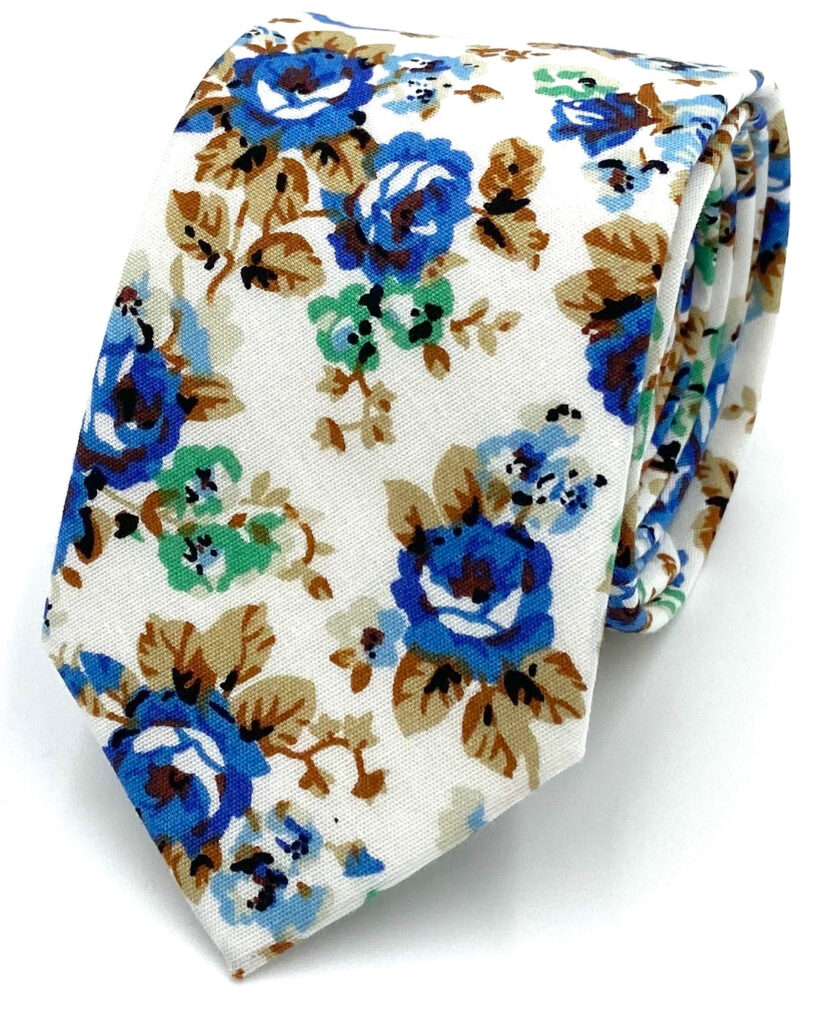
If you know you will be moving between formal and relaxed parts of an event, choose a tie that can handle both. The Snowy Bloom tie, with its delicate wintry pattern, can bring personality to a dressier outfit while still feeling at home at a less rigid celebration. The key is to keep the rest of the outfit calm: a clean shirt, simple pocket square if any, and polished shoes.
4. Know the difference between loosening and removing
Loosening your tie by an inch or two after the formal portion of an event is generally fine. Removing it entirely is a bigger style signal. It says the evening has moved from “occasion” to “party,” “work” to “after hours,” or “ceremony” to “let us find the dessert.” Make sure the setting has actually made that transition before you take it off.
When you loosen it, pull the knot down slightly but leave it centered. Do not let the tie hang crooked with the collar flared open unless you are deliberately going for a very relaxed look. If you remove it, take it off rather than stuffing it into a pocket or draping it over one shoulder. Fold or roll it loosely and place it somewhere clean. A tie that has spent the evening on a sticky table has earned neither character nor a sequel.
At a workplace event, follow the lead of the senior host or the general dress level of the room. Being the first person to look dramatically relaxed can attract more attention than you wanted. Being the last person still buttoned to the throat can do the same.
5. Handle the tie around food and conversation
Tie etiquette is also practical etiquette. Before eating anything especially messy, check that the tie is clear of your plate. You can discreetly move it to one side, tuck the narrow end behind the wide end, or use a tie bar if one is already part of your outfit. Do not knot it around your neck like a scarf; that only creates a new problem.
A tie bar should sit between the third and fourth shirt buttons and attach to both the tie and the shirt placket. It is meant to keep the tie in place, not to clamp it halfway up your chest. If you are wearing a textured or casual tie, a simple bar can be useful, but it is not compulsory.
During conversation, avoid repeatedly adjusting the knot. A single discreet fix is fine. Constant fiddling makes even an excellent tie look uncertain. Check the mirror before you leave, then let the tie do its work.
6. Read the room without abandoning your standards
The most polished person in a room is rarely the one following the most rules. It is the one who notices what the occasion requires and responds without making a production of it. If everyone remains dressed up, keep your tie on. If the host clearly relaxes the dress code, loosen it naturally. If the invitation, venue, or family tradition suggests extra formality, err slightly smarter rather than noticeably casual.
There is also no need to apologize for wearing a tie when others do not. A well-chosen tie is not a demand that everyone else dress up; it is simply your part of the visual conversation. Keep the knot neat, the colors compatible, and the attitude easy.
A quick tie-etiquette checklist
- Arrive with the knot snug, collar buttoned, and tie reaching your waistband.
- Keep the tie properly set for introductions, photos, ceremonies, and presentations.
- Use texture or a quiet pattern to suit relaxed settings without looking careless.
- Loosen only after the formal portion of the event has clearly ended.
- Remove the tie cleanly instead of stuffing it into a pocket or leaving it on a table.
- Protect it from plates, drinks, and enthusiastic hand gestures.
Good tie etiquette is really good situational awareness with a better knot. Dress for the moment you are entering, stay polished through the moments that matter, and relax when the room gives you permission. That balance will carry you through workdays, weddings, dinners, and the occasional event where nobody quite knows the dress code—including the person who wrote the invitation.